Retired UK Cardiologist Warns: The One Cholesterol Truth Every GP Was Trained To Never Say Out Loud
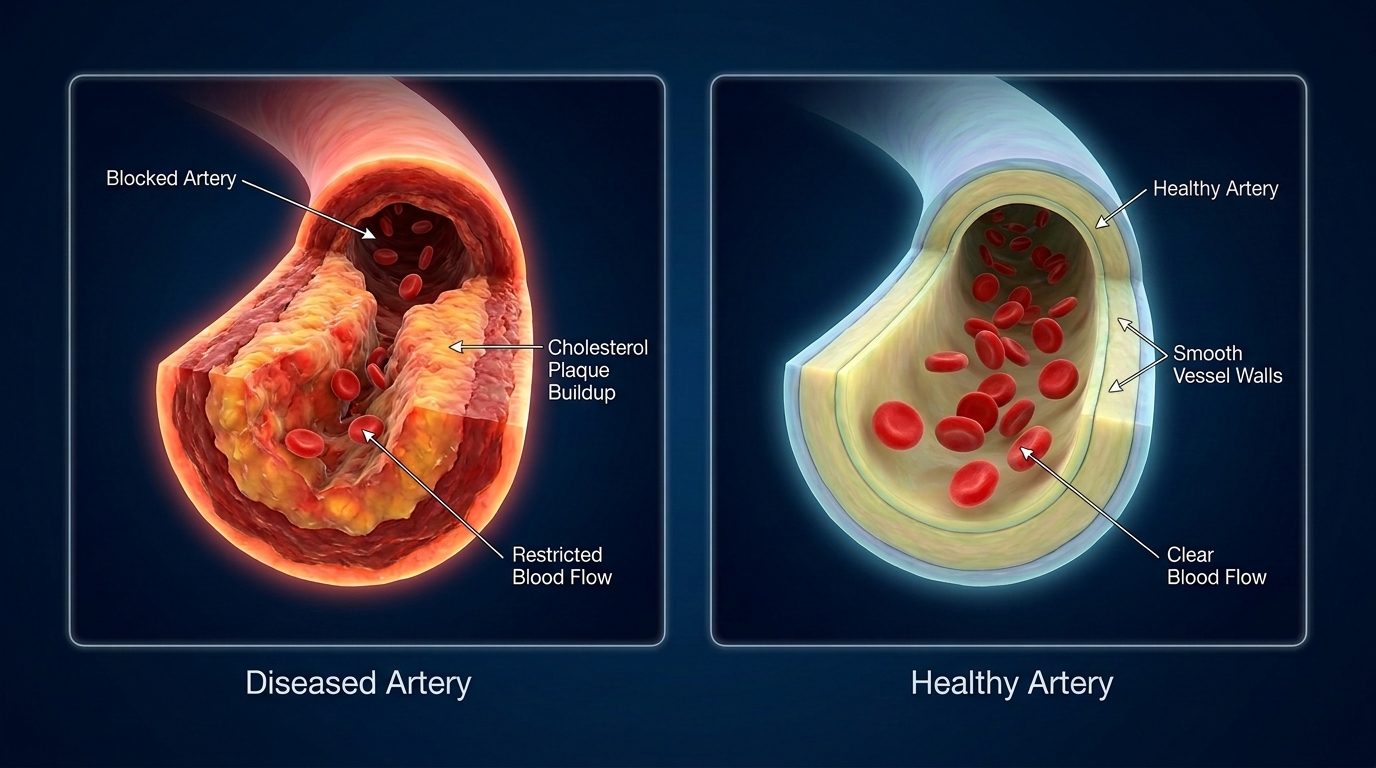
I am about to say something that would have got me struck off the register if I said it while I was still practicing.
Something the British pharmaceutical industry would very much prefer I take to the grave.
But I retired last year. And I am done being polite.
Because last Tuesday morning, I opened an email from a woman named Margaret. And by the time I finished reading it, I was sitting at my kitchen table crying.
She had written the whole message in one long unbroken paragraph. No line breaks. Like she could not stop typing.
But in the middle of it, one line was in capitals.
"I AM TERRIFIED I AM ABOUT TO MAKE THE SAME TRIP MY DAD MADE."
Margaret is sixty three. She runs a small florist on a high street in Yorkshire. Her last cholesterol reading came back at 7.2 mmol/L. Her GP has mentioned Atorvastatin twice in the last four months. She has an appointment next Thursday.
Her father was on Simvastatin for eleven years. His numbers were "textbook controlled" the entire time. He died of a heart attack in his kitchen at sixty seven with a blister pack next to the kettle.
Margaret has done everything right her whole life. She walks the dog twice a day. She has not touched a takeaway in six years. She takes the plant sterols from Holland and Barrett every morning with a glass of water. She has read every Gransnet thread on cholesterol from 2019 to now. She reads them at 11 pm in bed with the light off so her husband does not wake up.
And she is watching her numbers climb anyway.
If you are reading this and any part of that sounds like your life, I want you to give me the next eight minutes.
Because what I am about to tell you is the reason your father, your mother, your husband, or you keep hearing the word "controlled" from your GP while your body tells a different story.
My name is Dr. James Whitmore. I spent thirty four years as a consultant cardiologist at a large teaching hospital in the North West. I retired in 2023. I am now Medical Director of the British Heart Health Research Alliance, an independent research group with no ties to the pharmaceutical industry.
And I am about to tell you the one thing every cardiologist in this country is taught in training and told never to repeat outside the ward.
But first, let me tell you about the morning that broke me open.
The Morning That Changed Everything
It was a Sunday.
I was fifty nine years old. I had just finished a night on call. I was still in scrubs, sitting in the changing room, holding a coffee I had not drunk.
We had lost a patient at 4:47 that morning.
Her name was Susan. She was sixty one. Retired teacher. Two grandchildren. Simvastatin for nine years. LDL of 2.1 in her file. Total cholesterol of 4.4. Every number on her chart was inside the range NICE calls "well controlled."
She had come in at 3:15 with chest pain. She was gone by five.
Her daughter was sitting in the relatives' room in her pyjamas and a coat when I went to speak to her. She had thrown the coat on over her pyjamas to drive to the hospital. She was thirty six. She had two children asleep at home who did not yet know their nan had died.
She looked up at me and said, "But she was on the tablet. She was on the tablet."
I said what we always say. Sometimes these things happen. Her mother's numbers were well managed. She did everything she was supposed to do.
But that was not the whole truth.
And I knew it.
I had known it since my registrar years. Every cardiologist learns it in training. It sits in the textbooks. It is the reason "well controlled" patients still end up on my table. It is the reason your GP's dose keeps going up. It is the reason Ramipril gets added on top. It is the reason Amlodipine gets added on top of that.
The tablet was doing half the job.
The other half was killing Susan the entire time she thought she was being treated.
I drove home from that shift and sat in the drive for forty minutes before I could go inside. My wife came out to see what was wrong. I could not tell her.
That was the morning I decided I was going to spend my retirement figuring out what to do about the half of the job the tablet does not touch.
I did not know that decision would take another eleven years to bear fruit.
Or that Margaret's email would be the reason I finally wrote this down.
The Thing Every Cardiologist Learns And Never Says
For the next four years after I retired, I lived inside the research.
I read every trial on statin outcomes since 1994. I flew to conferences in Bangalore, Zurich, and Boston. I paid out of my own pension to sit in on a two week fellowship in Andhra Pradesh at the invitation of a researcher I had corresponded with for years.
And what I found made me want to ring every patient I had ever discharged with a statin prescription and apologise.
Here is what your GP is not telling you.
Your cholesterol number is not the danger.
Damaged cholesterol is.
That is not a technicality. That is the entire mechanism. And the entire pharmaceutical model for treating high cholesterol in this country ignores it.
Let me explain.
Your liver makes cholesterol every single day. It has to. Your cells need it. Your brain needs it. Your organs need it. You cannot live without it. Your liver sends it out through your blood on a delivery route. Cholesterol travels to where your body needs it, drops off what is required, and moves on. This is how a healthy system works.
But something goes wrong on the route.
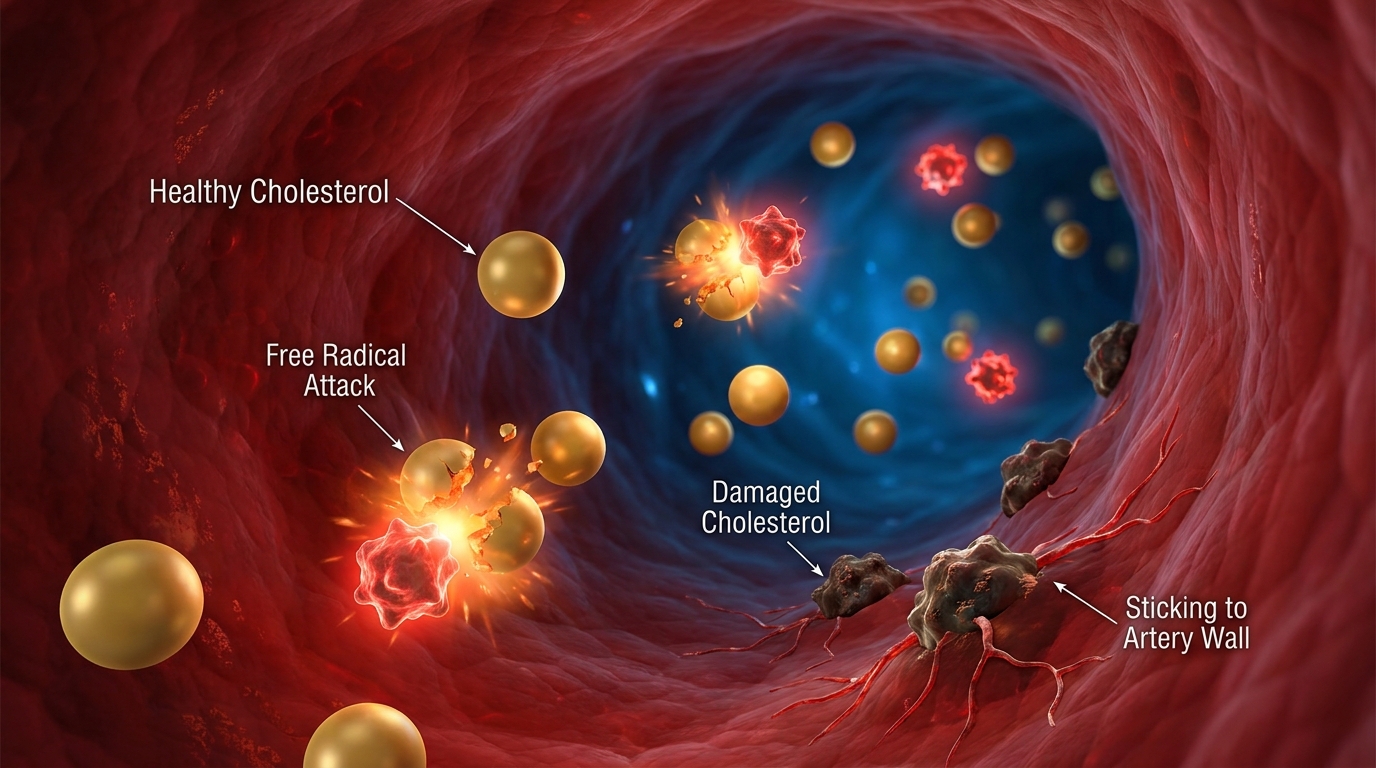
Your bloodstream is full of unstable molecules called free radicals. They come from stress. Processed food. Blood sugar spikes. Just getting older. And they attack the cholesterol while it is travelling through your blood.
They damage it.
Damaged cholesterol does not finish the route. It sticks. To the walls of your arteries. And once it is stuck, it stays stuck. More damaged cholesterol comes along and sticks right next to it. Layer after layer. That is plaque. That is the blockage. That is the heart attack.
Now here is the part your GP will not say out loud.
Your body does not know the cholesterol is stuck. It only knows it sent cholesterol out and it never came back. So it does what any system does when a delivery is missing. It sends more. Your body keeps making replacement cholesterol to make up for what it thinks it has lost to the buildup.
More gets damaged. More gets stuck. More gets replaced.
A cycle that feeds itself. The longer it runs, the higher your number climbs.
That is why your number goes up even when you are doing everything right.
That is why the plant sterols are not touching it.
That is why the porridge is not touching it.
That is why the fish oil is not touching it.
None of them address the damage. They work downstream. The damage keeps running.
The Proof Question Every GP Avoids
If you are still with me, answer this.
Why do millions of Britons over sixty have significant cholesterol buildup on scans and never have a heart attack?
And why do millions of others with "textbook controlled" numbers on their bloods have heart attacks anyway?
Same numbers. Same drug. Wildly different outcomes.
Because the number on your panel was never the danger.
The damage cycle was.
And here is the part that made me start writing this.
The statin does not stop the damage.
A statin forces your liver to stop producing cholesterol. It cuts the supply. Your number comes down. Your GP writes "well controlled" in your notes.
But the cholesterol still travelling through your blood is still getting damaged. Still sticking. Still building up on the wall. The drug lowered the amount. It never stopped the cause.
The cycle keeps running underneath.
That is why:
- People on statins still have heart attacks
- Your dose keeps going up
- Ezetimibe gets added on top
- Ramipril gets added on top of that
- Numbers that look perfect in the file still end in cardiac events
The rust keeps building underneath. The medication is doing what medication does. Lowering the supply. Not reaching the damage.
That is what killed Susan.
That is what killed Margaret's dad.
That is what killed the friend you keep thinking about.
The tablet was doing half the job. Nobody had anything on the formulary that addressed the other half.
Until now.
The Fruit Nobody In British Medicine Has Heard Of
The moment my whole understanding shifted was in a research library in Bangalore in the summer of 2021.
I was reading a paper by a physiologist named Dr. Suresh Gopa. He had spent his career at a university in Andhra Pradesh studying a small green fruit that grew wild in the hills.
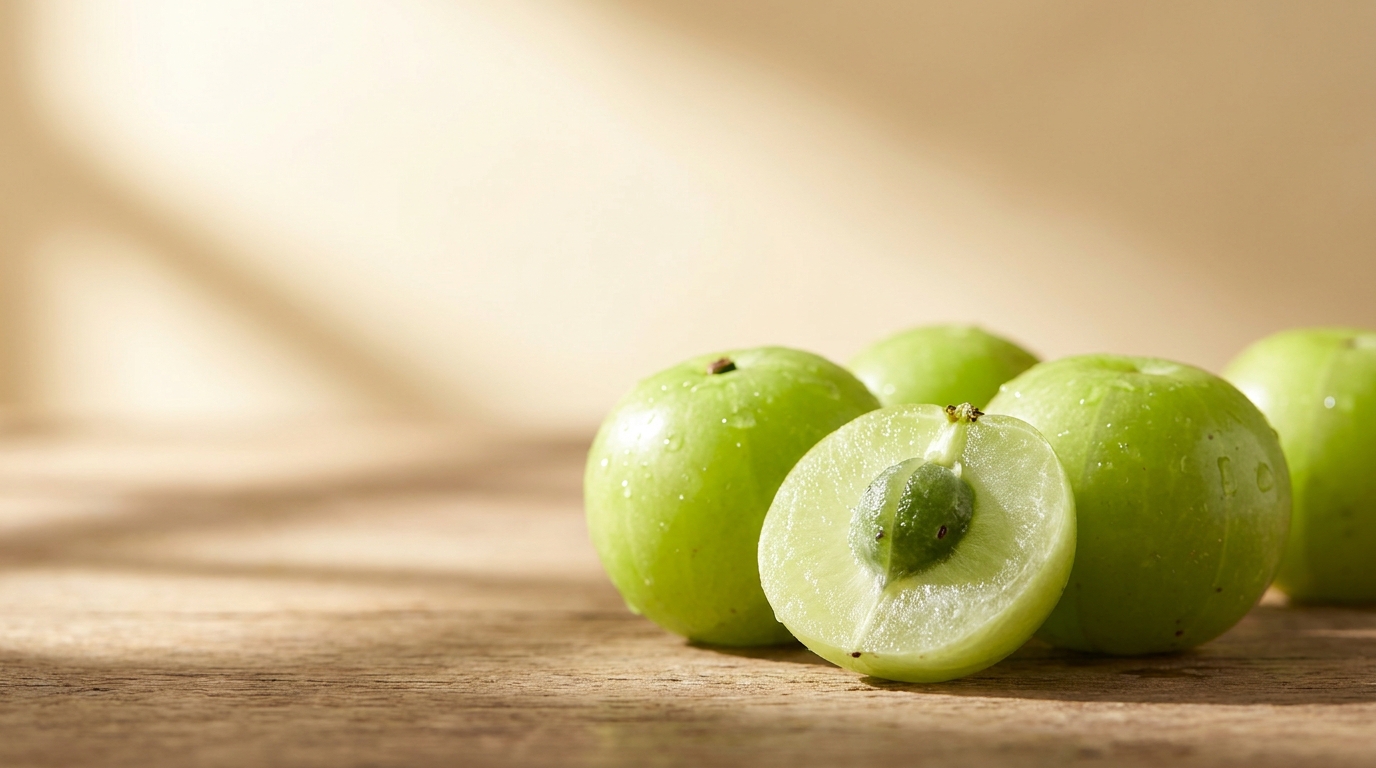
The fruit was called Amla. The Indian gooseberry.
I had never heard of it. Almost nobody in British clinical practice has. It is not on the BNF. It is not in NICE guidelines. It barely turns up on the Holland and Barrett shelf.
But healers in the Himalayas have been using it for over five thousand years. They called it Amalaki. "The nurse." It was the remedy they reached for when somebody's body was breaking down from the inside.
I sat in that library and I read Dr. Gopa's paper twice.
He had taken a standardised extract of this fruit. Not raw powder. Not dried fruit ground up in a mortar. A properly standardised extract of the active compound inside it. A class of antioxidants called emblicanins.
He put that extract head to head against Simvastatin. One of the most widely prescribed statins in the UK.
Sixty patients. Twelve week trial. Randomised. Controlled.
At twelve weeks, the Amla group's LDL had dropped by an average of thirty two percent.
Triglycerides down.
HDL up.
Comparable to the drug.
Without the muscle aches. Without the brain fog. Without the CoQ10 depletion that leaves my patients feeling like they aged twenty years in eighteen months.
I closed the paper and I did not speak for an hour.
A superfruit extract. Going head to head with the same prescription sitting at Boots. And matching it.
I stayed in Bangalore for another six days. Dr. Gopa met me for coffee. Then dinner. Then breakfast the next morning. We spoke for hours.
Here is what emblicanins actually do.
They enter your bloodstream and they neutralise the free radicals before those free radicals can damage the cholesterol.
Not in the gut like porridge oats.
Not on the triglycerides like fish oil.
Not blocking absorption like plant sterols.
Not forcing the liver to shut down like a statin.
Directly in the bloodstream. Where the damage is actually happening.
When the emblicanins neutralise the free radicals, the assault stops. When the assault stops, the cholesterol stops getting damaged. When it stops getting damaged, it stops sticking to the artery wall. When it stops sticking, your body stops getting the signal that the delivery did not come back.
And when the cycle breaks, your body stops over producing.
Your number comes down. Not because a drug forced your liver to shut down. Because your body no longer needs to keep making replacement cholesterol to cover what is being lost.
You did not need a stronger drug.
You needed to stop the damage upstream.
Dr. Gopa smiled at me across the table on that last morning and said, "You British doctors have been trying to lower the flood without turning off the tap."
I have not forgotten it since.
Why This Did Not Reach Your GP
You might be wondering how this research has been sitting in peer reviewed journals since 2012 and your GP has not heard of it.
I will tell you.
There is no money in it.
You cannot patent a fruit. You cannot bill the NHS £2.30 per prescription for a standardised botanical extract when the same shelf holds a statin the pharmaceutical companies have spent forty years marketing to your GP through drug reps, sponsored conferences, and formulary contracts.
Amla does not have a marketing budget.
Statins do.
There are ninety thousand GPs in the UK. Every one of them was trained inside a system where the pharmaceutical companies wrote the pathway. Not because your GP is malicious. Because your GP was trained inside the machine.
I know because I was one of them for thirty four years.
And I never once mentioned Amla to a patient while I was still on the payroll.
That is the part I am sorry for.
That is why I retired early.
That is why I am writing this now.
The Three Things That Have To Happen
After Bangalore I spent another eighteen months mapping every trial I could find on Amla and cardiovascular outcomes.
Andhra Pradesh 2011. LDL reduction with standardised extract, no adverse effects.
Delhi 2016. Twelve week trial, oxidised LDL markers dropped consistently.
A pooled review from 2020 covering seven trials, hundreds of subjects. Consistent effects across age, gender, and baseline lipid levels.
The literature was not fringe. It was buried.
And here is what all of it agreed on.
For a natural intervention to actually move the needle on cholesterol, three things have to happen in the right order.
One. You have to STOP THE DAMAGE.
The free radicals in the bloodstream have to be neutralised at the source. Porridge does not do this. Plant sterols do not do this. Fish oil does not do this. They all work downstream of the damage. The damage keeps running.
Two. You have to LET THE CYCLE BREAK.
Once the damage stops, the cholesterol stops sticking. Once it stops sticking, the body stops getting the signal to over produce. This takes time. Usually four to six weeks. This is the phase where nothing feels different but everything is shifting.
Three. You have to LET THE NUMBER FALL NATURALLY.
This is not a drug shutting down your liver. This is your body doing what it already knows how to do. Your body regulates its own cholesterol production perfectly when the cycle is not being driven by an underlying damage loop. Numbers usually start to shift on paper somewhere between week five and week ten.
Miss any one of these, and you are wasting your time.
That is why glucosamine style supplements do not work for cholesterol. That is why Benecol drinks nudge the number a little and then plateau. That is why the walnuts and the flaxseed and the Mediterranean diet get you a small drop and then stall.
None of them stop the damage. All of them work around it.
Amla is the only intervention I have found that addresses the actual mechanism.
And in a standardised, properly sourced extract, it works.
What Happened To Margaret
I emailed Margaret back the day I received her message.
I told her exactly what I have just told you. Same mechanism. Same research. Same references.
I told her I could not prescribe anything to her because I am retired. But I could tell her about a standardised Amla extract I had personally been taking for two years, and that I had been quietly recommending to family and close friends for six months.
I asked her to bring the information to her GP appointment on the Thursday. Not to stop the conversation about Atorvastatin. To ask her GP to give her twelve weeks before starting.
She emailed me the following Friday. Her GP had agreed. Bloods to be repeated in twelve weeks.
Margaret started that Sunday. Two capsules with water every morning before opening the shop.
Six weeks in she wrote to say she had felt no different. I told her that was normal. The emblicanins were doing work she could not feel from the outside. The damage was slowing. The wall was stabilising. The cycle was starting to ease.
Ten weeks in she wrote to say her sleep had improved. Her joints felt looser. She was less bothered by the stairs at the shop.
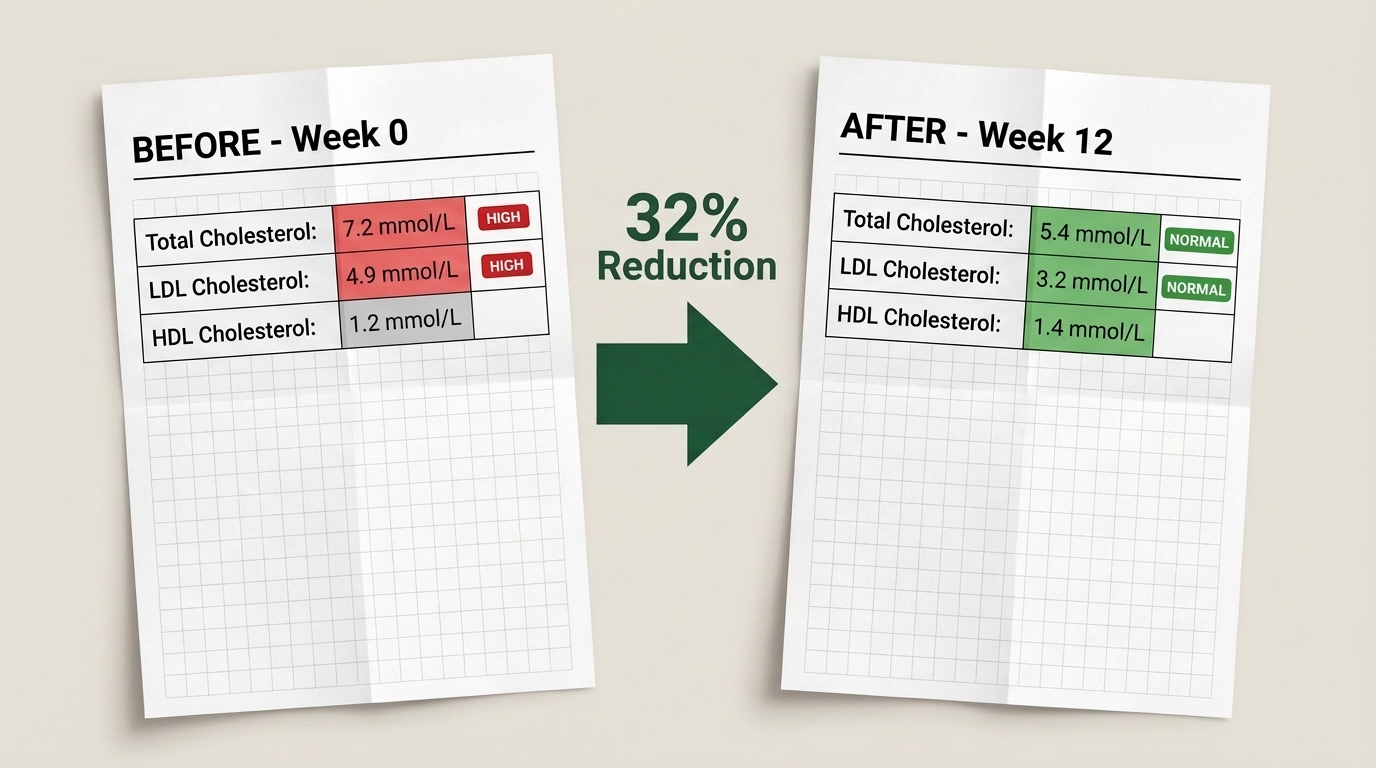
Twelve weeks in her repeat bloods came back.
Total cholesterol 5.4. Down from 7.2.
LDL 3.2. Down from 4.9.
Both below the threshold that had put the prescription in her hand.
Her GP sat back in her chair and asked her what she had been taking. Margaret told her. Her GP said, "Whatever you are doing, keep doing it. I am taking the note off your record."
Margaret rang me from her car in the surgery car park. She could not speak for the first thirty seconds. When she did she said, "James. I did not have to take it. I did not have to take it."
I have twelve emails like Margaret's now. Not one is a fabrication. Not one is paid for. Not one is written by a marketing team.
They are twelve women and four men who read what I sent them, brought the research to their GP, gave their body twelve weeks, and watched their number come down without touching a statin.
The Product I Am Actually Taking
Now, this is where I have to be careful.
Because there is a lot of Amla being sold in this country. And most of it is rubbish.
Cheap dried fruit powder in gelatin capsules from a warehouse in Guangzhou. Heat processed, which destroys the emblicanins that make it work in the first place. No standardisation. No third party testing. No guarantee that what is on the label is inside the bottle. A shelf full of it on Amazon at seven ninety nine.
The difference between raw Amla powder from Amazon and a properly standardised extract is the difference between chewing willow bark and taking aspirin.
One is the plant. The other is the concentrated, verified compound that produces a measurable clinical result.
The Amla in Dr. Gopa's trial was a standardised extract. Not raw fruit powder. That distinction is the difference between what he measured and what you will get from a bargain bottle.
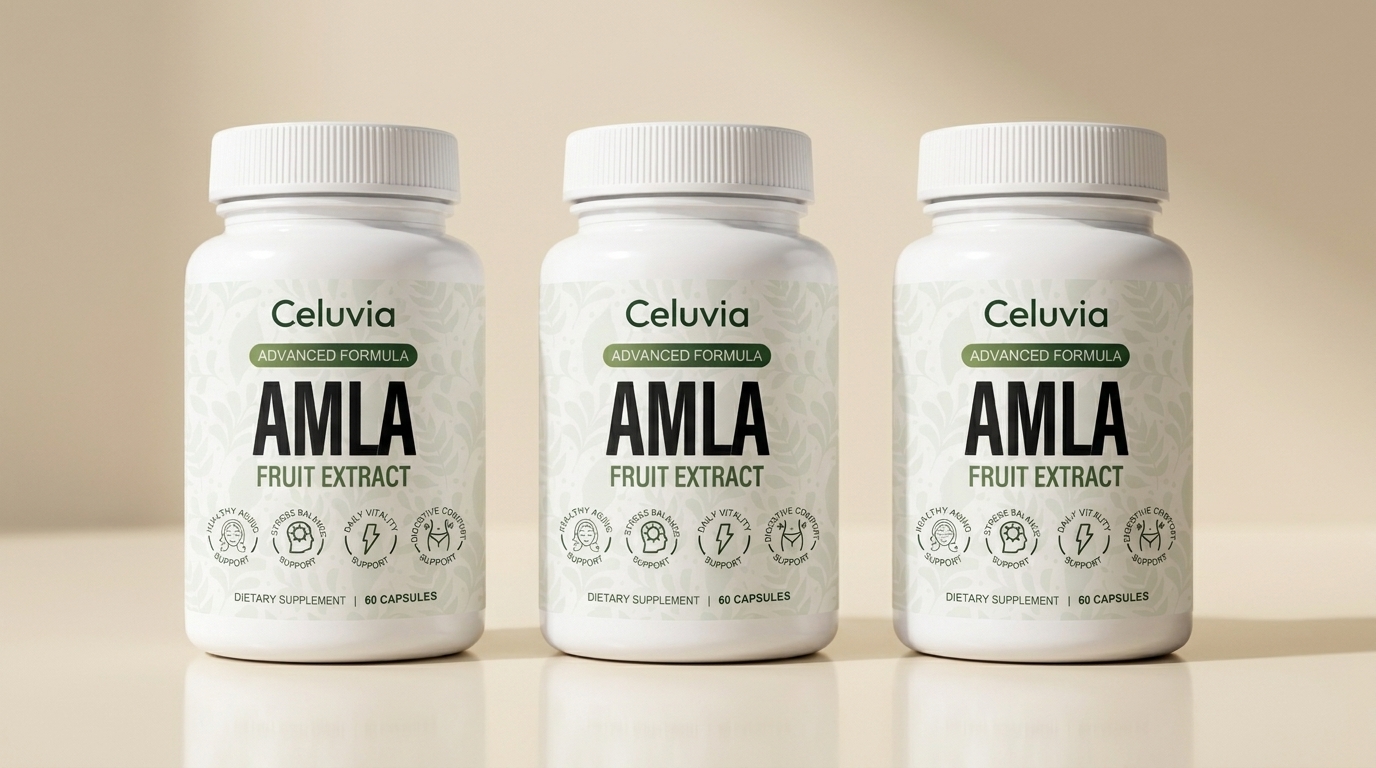
The specific brand I take every morning, and the one I sent to Margaret, is called Celuvia.
It is a small UK company. I have no financial interest in them. I do not sit on their board. I have never been paid by them. I know the founder because he wrote to me in 2023 asking if I would review his supplier documentation before he brought the product to market.
I said yes because I was curious and free.
Here is what I found.
One. Standardised extract, not raw powder. The emblicanin concentration is verified to match the concentration used in the Andhra Pradesh trials. This is the single most important thing when it comes to Amla, and almost nobody on the shelf does it.
Two. Cold processed, small batch. Emblicanins are destroyed by heat. Most Amla on the market is heat processed because it is cheaper. Celuvia is cold processed in small batches because it is the only way to keep the active compounds intact.
Three. GMP certified. Third party tested for purity and potency. Every batch is verified by an independent laboratory before it leaves the facility. The paperwork is available on request. I asked for it in 2023 and I got it within twenty four hours.
That was the reason I agreed to put my name near this product when the founder asked me if I would write about it publicly.
I would not stake thirty four years of clinical reputation on something I had not personally verified.
I have.
What The First Eight Weeks Look Like
I want to be honest about what to expect.
Because Amla is not caffeine. It does not announce itself. If you take Celuvia expecting to feel a rush within an hour, you will be disappointed and you will stop before it has done anything.
Here is what actually happens.
Weeks one to two. The assault slows.
You will feel nothing.
This is the phase where the emblicanins are entering your bloodstream and neutralising the free radicals that have been damaging your cholesterol for years. There is no sensation. No fizz. No warmth. Nothing to Instagram.
Underneath, the damage is slowing. The rate at which new cholesterol is getting damaged and stuck is dropping. But you cannot feel that from the outside.
Most people give up in this window. Do not.
Weeks three to four. The cycle breaks.
Some people start to notice small things here.
Better sleep. Less morning stiffness. A quieter head. Nothing dramatic. Nothing you would attribute to a cholesterol supplement if you did not know what to look for.
What is happening underneath is that the body is starting to sense that the delivery is no longer going missing. The signal to over produce is dropping. The cycle is starting to unwind.
The number on paper has not yet moved. Do not test yet.
Weeks five to eight. The number starts to fall.
This is the window where the shift shows up in your bloods.
Most people I have followed see a reduction between eight percent and thirty two percent in LDL over eight weeks of consistent use. Total cholesterol drops in the same range. Triglycerides drop. HDL tends to hold steady or rise slightly.
If you have a GP appointment coming up in three to four months, this is the window you want to be entering it in.
Two capsules every morning with water. Before breakfast. Consistency is the only rule that matters.
The Price
Here is what treating high cholesterol looks like on the standard pathway.
The GP route
Repeat six monthly appointments, four to six per year on average. Prescription statin, ongoing, indefinitely. Escalation to a second drug within two to five years for most patients.
Total cost to the taxpayer: an average of £412 per patient per year in prescription and appointment costs.
The private route
Consultation with a private cardiologist: £280 to £450. Full lipid subfraction panel: £180 to £250. Follow up consultations: £220 to £350 each.
Total for one full workup: £1,200 to £1,800.
Celuvia
£15.42 per bottle when you take the Buy 2 Get 1 Free bundle. Three bottles total.
£46.25 for the full twelve week clinical window. Less than the cost of two takeaways.
I did not set the price. I would not know how to. The founder made the decision to price it low enough that a pensioner on a fixed income could afford it.
He did that because I asked him to.
I told him if this product was going to sit on the same table as thirty four years of my clinical judgement, it was going to be a price that reached the women in my old practice who could not afford Harley Street.
He agreed.
The Buy 2 Get 1 Free bundle at £46.25 for three bottles is the option I would recommend to any patient sitting in front of me today. Twelve weeks is the clinical window. Three bottles covers it. It works out at £15.42 per bottle.
The 90 Day Guarantee
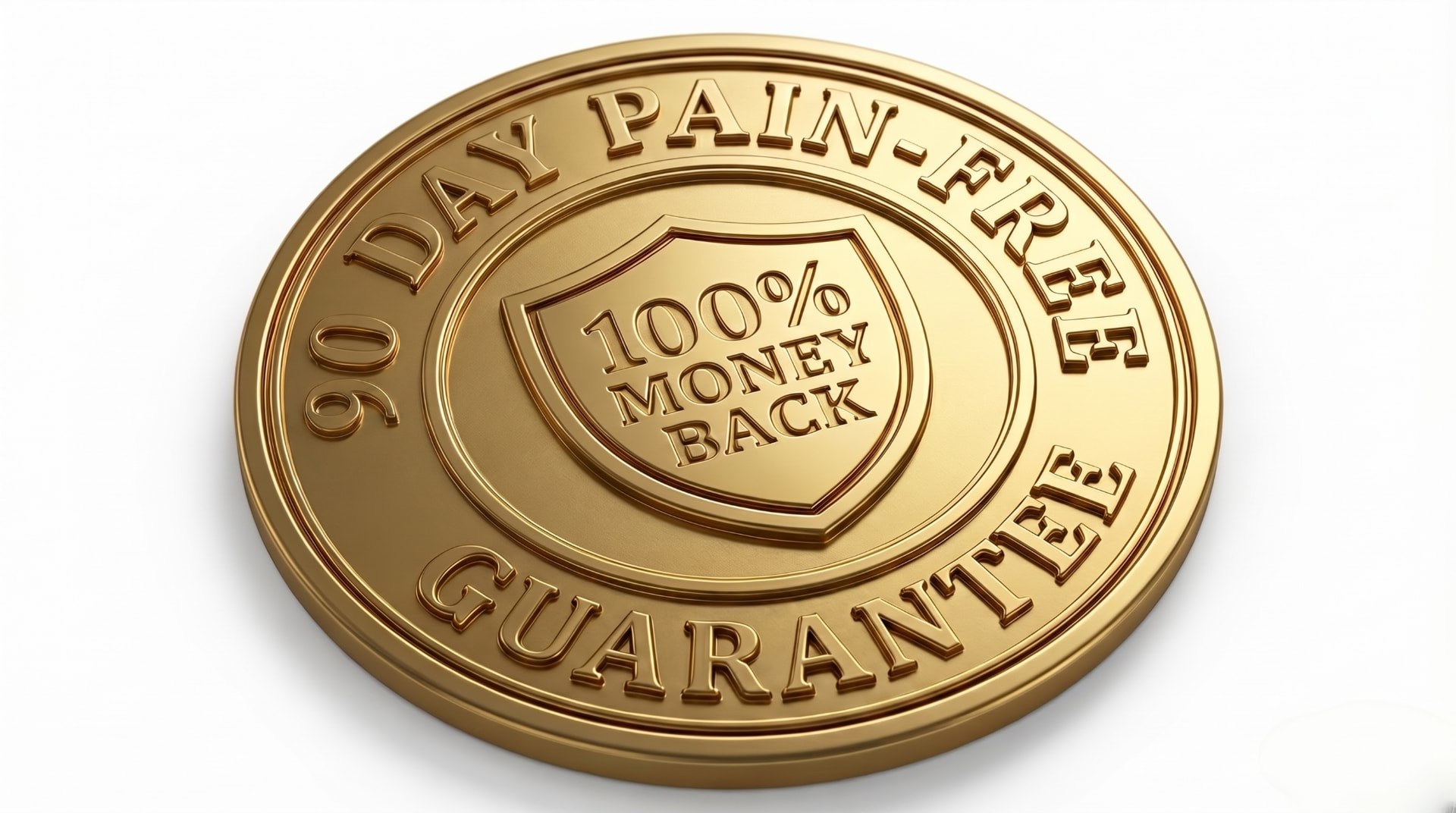
If you order today and it does not work for you, you send the empty bottles back and Celuvia refund you the full purchase price.
Not store credit. Not a hoop to jump through. A refund.
You have ninety days.
That is longer than the clinical window. Which means if you take Celuvia for the full three months as directed and your bloods do not shift, you still have time to return the empty bottles and get every penny back.
The only thing you risk is the cost of the postage.
The Two Paths
I want to be plain about something before I finish.
You are at a crossroads. The path you pick in the next ten minutes will define the next ten years of your life.
Path one. You close this page and go back to what you were doing.
You go to your appointment next month. You either accept the Atorvastatin your GP is pushing, or you refuse it again and buy another six months. You keep drinking the plant sterol drinks. You keep taking the porridge. You keep watching the number climb. You lie awake the night before every set of bloods. You wait for the day your GP stops asking and starts telling.
Or worse. You wait for the day your daughter drives to the hospital in her pyjamas.
Path two. You give your body twelve weeks.
You order three bottles of Celuvia today. You take two capsules every morning with water before breakfast. You bring the research to your next GP appointment and ask her to give you twelve weeks before starting the prescription. You give the emblicanins the window they need to do the work.
And at the twelve week mark, you get your bloods redone.
If the number has moved the way it moved for Margaret, and for the other people I have followed, you have a real conversation with your GP about staying off the tablet.
If it has not moved enough, you send the empty bottles back. You get your money back. You lose nothing.
Both paths cost you something. One path costs you £46.25 and twelve weeks.
The other one has been costing you your peace of mind for years.
What To Do Right Now
If you are ready to give your body twelve weeks:
- 1. Click the button below to go to the Celuvia website.
- 2. Choose the Buy 2 Get 1 Free bundle. It is the twelve week clinical window in one order. £46.25 for three bottles, which works out to £15.42 per bottle. Free UK shipping is included.
- 3. Enter your delivery details. Orders placed before 3pm ship the same day from the warehouse.
- 4. Start the morning they arrive. Two capsules with water before breakfast.
- 5. Book your repeat bloods for twelve weeks after your first capsule.
That is it.
There is nothing else you have to do. You do not need to change your diet. You do not need to start a new exercise regime. You do not need to give up your evening glass of wine. You give the emblicanins twelve weeks. The mechanism does the rest.
£46.25 for three bottles. Free UK shipping. 90 day money back guarantee.
Do not close this page thinking you will come back later.
I have watched too many Margarets not send the email in time.
Your appointment is coming. The damage is running whether you address it or you do not.
Twelve weeks starts the day the bottles arrive.
With honesty,
Dr. James Whitmore
Medical Director, British Heart Health Research Alliance
Retired Consultant Cardiologist, 34 years
P.S. I want to say one thing about working with your GP. Do not stop your statin on your own. Bring this page to your next appointment. Ask her to run repeat bloods at twelve weeks. Most GPs I speak to are willing to give a patient twelve weeks if the patient is doing something structured and coming back for follow up. Your GP is not the enemy. The system she was trained in is. Work with her, not against her.
P.P.S. I am not telling you to stop your medication if you are on one. That conversation is between you and your GP. What I am telling you is that the tablet only works on the supply side. Everything I have described in this page is about the other side. The damage side. The side the tablet does not touch. You give your body twelve weeks on Celuvia and you find out at your next set of bloods whether the mechanism I have described applies to you.
P.P.P.S. If the page is showing "sold out" when you click, get on the waitlist. Celuvia produce in small cold pressed batches to preserve the emblicanins and the waitlist moves faster than the last batch. Do not wait for the batch after this one.
£46.25 for three bottles. Free UK shipping. 90 day money back guarantee.
WHAT CUSTOMERS ARE SAYING

Diane Whitfield
Been on the plant sterols and the yoghurt drinks for four years. Every year my cholesterol went up a bit more. My GP was pushing Atorvastatin at my last review. I read Dr Whitmore's page one Sunday afternoon and ordered the three bottle bundle that evening. Twelve weeks later my total came down from 6.9 to 5.2. My GP asked me twice what I'd changed. When I told her she wrote the name down. I'm on my second order now.

Malcolm Reeves
Went on statins in 2019. Lasted 8 months before my legs stopped working properly. My GP said the muscle pain was in my head. I stopped taking them and my cholesterol went back up. Read this article. Ordered three bottles. Not going to pretend I wasn't sceptical, I was. But my bloods at 14 weeks came back at 5.1, down from 7.3. First honest drop I've had without a tablet in my body. I don't argue with my results.

Jean Bramwell
I'm 66. My mum died at 71 from a heart attack. I watched her take Simvastatin for years and it didn't save her. Last summer my own bloods came back at 7.0 and my GP started the same conversation. I said no. Started looking for something natural that actually did something. Found this page. Took it for three months. My last panel was 5.4. My GP now checks me every six months instead of pushing the prescription. I want to be here when my granddaughter graduates.

Peter Holloway
Tried everything on the Holland and Barrett shelf over about five years. Fish oil, red yeast rice, plant sterols, garlic capsules, the lot. My cholesterol went from 6.4 to 7.8 in that time. Something wasn't working. Dr Whitmore's explanation of the damage cycle was the first thing that made real sense to me. I ordered three bottles that week. Twelve weeks later my number was 5.8. Small drop but the trend has finally reversed. That is what I needed to see.

Susan Fairbrother
I was terrified of statins after watching my father in law go on them. He was never the same. When my own cholesterol hit 7.1 my GP wanted me on Atorvastatin straight away. I asked for twelve weeks and got it. Took two capsules every morning like the page said. Follow up bloods came back at 5.6. My GP didn't say much, just wrote it down and told me to come back in six months. I'm relieved. I'll admit that. Just relieved.
References
- Gopa B, Bhatt J, Hemavathi KG. A comparative clinical study of hypolipidemic efficacy of Amla (Emblica officinalis) with 3-hydroxy-3-methylglutaryl-coenzyme-A reductase inhibitor Simvastatin. Indian J Pharmacol. 2012 Mar;44(2):238-42. [PMC3326920]
- Usharani P, Merugu PL, Nutalapati C. Evaluation of the effects of a standardized aqueous extract of Phyllanthus emblica fruits on endothelial dysfunction, oxidative stress, systemic inflammation and lipid profile in subjects with metabolic syndrome. BMC Complement Med Ther. 2019.
- Akhtar MS, Ramzan A, Ali A, Ahmad M. Effect of amla fruit (Emblica officinalis Gaertn.) on blood glucose and lipid profile of normal subjects and type 2 diabetic patients. Int J Food Sci Nutr. 2011.
- Yokozawa T, Kim HY, Kim HJ, et al. Amla (Emblica officinalis Gaertn.) prevents dyslipidaemia and oxidative stress in the ageing process. Br J Nutr. 2007.
This is an advertisement, not a news article or editorial. The story on this page and the narrator depicted are illustrative. Dr James Whitmore is a persona used to present health information in an editorial format. Any specific patients, colleagues, or clinical outcomes referenced in the story are illustrative and do not represent actual named individuals. Reviews on this page reflect experiences some customers have reported and may not represent the results you will achieve. Individual results vary. This page may receive compensation for clicks on or purchase of the featured product.
Celuvia is a food supplement and is not intended to diagnose, treat, cure or prevent any disease. Statements on this page have not been evaluated by the MHRA. If you are currently taking prescription medication for high cholesterol, blood pressure, or any other condition, consult your GP before starting Celuvia or any new supplement. The information on this page is for informational purposes only and is not a substitute for advice from a qualified healthcare professional.